
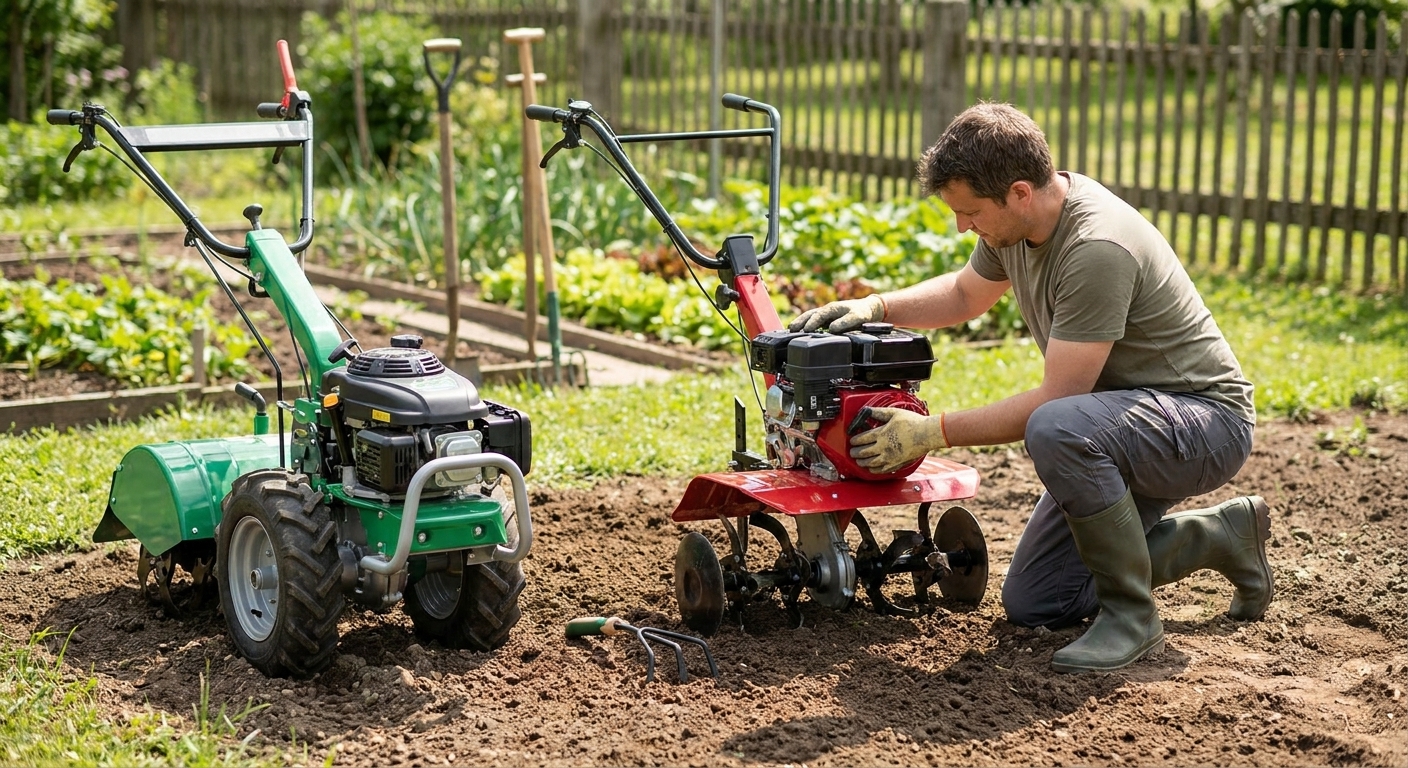
Picking the wrong tiller means either fighting a machine too heavy for your beds or grinding through roots with a cultivator that stalls every 10 feet. This guide walks through matching tine type, engine size, and tilling width to your actual yard so you buy once in 2026 and skip the return shipping.
- Match tine position to soil: front-tine for worked beds under 2,500 sq ft, rear-tine for new ground or clay.
- Engine size matters more than horsepower claims — 140cc-212cc handles most home yards in 2026.
- Tilling width of 10-16 inches suits raised beds; 18-24 inches suits open plots over half an acre.
- A tiller under 30 lbs is easy to store but stalls in compacted soil deeper than 4 inches.
- Buy based on soil hardness first, plot size second — engine spec last.
Why this matters
A tiller is not a one-size tool the way a shovel is. Front-tine models weigh 20-40 lbs and work loose or previously-tilled soil; rear-tine models run 100-200 lbs and are built for breaking new ground or compacted clay. Buy the wrong class and you either wrestle a machine that bucks on rocky soil or overpay for power you never use on a 400 sq ft raised bed setup.
The difference shows up fast: a front-tine cultivator rated for garden soil will stall or hop across the surface the moment it hits root-bound turf. A rear-tine tiller will chew through that same turf in one pass but takes up garage space and needs a truck bed or trailer to move. Getting the class right before you shop for horsepower or attachments saves the return trip.
What you'll need
- A tape measure or pace-count of your garden plot (square footage matters more than "small" or "large")
- A shovel test — dig 6 inches down to check soil hardness and rock content
- Storage space assessment (garage shelf vs floor space for a rear-tine unit)
- Safety gear: closed shoes, eye protection, and gloves for engine start and blade contact
- A fuel or charging plan if you're comparing gas, electric, or cordless models
- A budget range before you start browsing so engine size doesn't creep up on you
The steps
Step 1: Measure your plot and classify it
Walk the perimeter of the area you'll actually till and get a real square footage number, not a guess. Anything under 1,000 sq ft usually calls for a front-tine or cultivator-class machine; anything over half an acre justifies a rear-tine tiller with a wider working path.
This step accomplishes the single biggest decision in the whole process — plot size drives everything else, from engine displacement to tine width. Skip it and you'll shop by price instead of by fit.
Common mistake: rounding up plot size out of habit and buying a rear-tine machine for a bed that a 21-inch front-tine unit would have handled in half the storage space.
Step 2: Test your soil before you shop
Dig down 6 inches with a shovel in three spots. Loose, previously-worked soil that crumbles apart needs a front-tine tiller. Clay that holds a shovel shape or turf with visible root mat needs a rear-tine machine with counter-rotating tines.
Soil hardness is the variable most buyers skip, and it's the reason a lot of tillers get returned. A front-tine unit rated for garden soil will bounce across compacted ground instead of digging in.
Common mistake: testing soil in one spot near the house instead of across the whole plot — soil compaction varies a lot across a single yard, especially near foundations or old driveways.
Step 3: Pick your power source
Gas engines in the 140cc-212cc range give you the most consistent torque for tough soil and don't need a cord or battery swap mid-job. Electric corded models work for small plots near an outlet but limit your range. Cordless battery units trade some runtime for zero fumes and easier storage.
For anyone tilling more than one bed in a session, gas still wins on sustained torque in 2026 — battery tillers are closing the gap but still lag on continuous heavy-clay work.
Common mistake: buying a cordless tiller for a large plot and running out of battery mid-row, then waiting on a charge cycle to finish the job.
Step 4: Match tilling width to bed layout
Raised beds and rows under 3 feet wide need a tiller with a 10-16 inch working width so you don't chew into pathways or bed frames. Open plots over half an acre benefit from an 18-24 inch width because fewer passes means less time and less fuel or battery use.
Width also affects maneuverability — a 24-inch rear-tine unit turns wide and struggles in tight raised-bed corners even if it powers through soil easily.
Common mistake: buying the widest tiller available assuming bigger is always faster, then realizing it can't fit between existing raised beds.
Step 5: Check working depth, not just horsepower
Most home tillers work 6-10 inches deep, which is enough for vegetable beds and lawn prep. Depth matters more than raw horsepower numbers on a spec sheet — a machine with more depth adjustment settings gives you control for first-till versus maintenance-till passes.
A tiller stuck at a single fixed depth setting forces you to either over-till soft soil or under-till compacted ground.
Common mistake: assuming higher horsepower automatically means deeper tilling — depth is controlled by tine design and depth stakes, not engine size alone.
Step 6: Weigh storage and portability
A front-tine or cultivator-class tiller in the 20-40 lb range stores on a garage shelf or hangs on a wall bracket. A rear-tine machine at 100-200 lbs needs floor space and, in most cases, a ramp to load into a truck bed.
This is where a lot of buyers get surprised after delivery — weight determines whether the tiller lives in a shed corner or takes over half the garage.
Common mistake: ignoring weight until delivery day, then discovering the unit can't be lifted solo out of a truck bed or up porch steps.
Step 7: Confirm maintenance and safety basics before first use
Check oil and fuel requirements for gas models before the first start, and always start on a stable, cleared surface. Wear closed-toe shoes, eye protection, and gloves — tine contact and thrown debris are the two most common tiller injuries.
A five-minute pre-start check (oil level, tine bolts, fuel) prevents the majority of first-use stalls and jams.
Common mistake: running a new gas tiller without checking oil level first, which can seize a small engine in one session.
Troubleshooting
- Tiller bounces instead of digging in: soil is too compacted for a front-tine model — switch to a rear-tine machine or break the ground with a fork first.
- Engine stalls repeatedly: check for old fuel, a clogged air filter, or tilling too deep on the first pass — reduce depth and make two passes instead of one.
- Tines clog with grass or roots: stop the engine, clear tines by hand, and consider a slower first pass over sod-heavy ground.
- Machine pulls hard to one side: tines may be uneven or one side is hitting a root or rock — inspect tines before continuing.
- Cordless tiller loses power mid-row: battery voltage drops under heavy clay load — plan shorter sessions or keep a second charged battery on hand.
- Excessive vibration: loose tine bolts are the most common cause — check and re-torque before every session.
Tools and resources
- Tape measure for plot sizing
- Shovel or soil probe for the hardness test in Step 2
- Safety glasses, gloves, and closed-toe boots
- A Real Deal Variety Store product listing to compare current outdoor power equipment options against the criteria above
- A notepad to track plot square footage and soil type before you shop, so the spec sheet matches your yard instead of the other way around
What to do next
Once you've matched tine type, power source, and width to your plot, the next practical step is planning your tilling schedule around soil moisture — tilling wet clay compacts it further, while bone-dry soil resists tines. Aim for soil that crumbles in your hand rather than clumping or dusting, and revisit this checklist each spring before the 2026 growing season starts.
FAQ
What's the best garden tiller size for a small yard?
For plots under 1,000 sq ft, a front-tine tiller with a 10-16 inch width handles the job without overpowering raised beds. Anything wider turns poorly between rows.
Is a rear-tine tiller better than a front-tine tiller?
Rear-tine tillers handle new ground, clay, and root-bound turf better because the tines pull the machine forward. Front-tine models are lighter and better suited to soil that's already been worked at least once.
How much does a home garden tiller cost in 2026?
Front-tine and cultivator-class tillers typically run lower than rear-tine models due to smaller engines and lighter frames, though exact pricing varies by retailer and current stock.
Do I need a gas or electric tiller?
Gas tillers in the 140cc-212cc range handle sustained tough soil work better, while electric and cordless models suit smaller plots near a power source or where fumes aren't practical.
How deep should a garden tiller dig?
Most home tillers work 6-10 inches deep, which covers vegetable bed prep and lawn renovation. Depth adjustment matters more than horsepower for controlling this.
Can a tiller break up compacted clay soil?
A rear-tine tiller with counter-rotating tines can break compacted clay, but a front-tine or cultivator-class machine will usually bounce across the surface instead of digging in.
How heavy is a typical garden tiller?
Front-tine and cultivator models run 20-40 lbs, while rear-tine tillers run 100-200 lbs. Weight determines storage needs and whether one person can load it alone.
What's the difference between a cultivator and a tiller?
A cultivator mixes and aerates soil that's already loose, while a tiller breaks new or compacted ground. Cultivators are lighter and cheaper but can't handle root-bound turf.
One last thing
The soil test in Step 2 is the one step most buyers skip and the one that causes the most returns — a shovel test takes two minutes and tells you more about which tiller class you need than any spec sheet does.